How to Write a Memoir: 4 Questions to Get You Started
In our latest free monthly memoir writing webinar, Get Stuck Into Your Life, Joanne Hichens and Jo-Anne Richards explored the essential questions every memoir writer needs to answer.
Rather than a traditional lecture, this was a truly collaborative session built around four essential questions every memoir writer needs to answer. Participants from the UK, South Africa, Italy, Portugal, Namibia and beyond shared their reasons for wanting to write, the slices of life they’re drawn to explore, what drives them to keep going, and the obstacles they anticipate.
The result was an hour of moving, honest and deeply practical conversation. Watch the full replay below, and then scroll down for our detailed takeaways and tips.
How to Write a Memoir: Watch Our Free Webinar Replay
Get Stuck Into Your Life: Essential Insights from Our Memoir Writing Webinar
There’s a moment when the urge to tell your story becomes impossible to ignore. Maybe you’ve been thinking about it for years. Maybe something happened recently that crystallised everything. Either way, if you’re feeling that pull, you’re not alone – and last week’s webinar proved it.
When Joanne Hichens and Jo-Anne Richards asked participants why they wanted to write their memoir, the chat exploded with responses – from wanting to leave a legacy for children and grandchildren, to making sense of a life shaped by apartheid, cults, loss and love. It was a powerful reminder that every person carries a story worth telling, and that the act of writing it down can be transformative.
Here are the key insights and practical tips from the session.
Know Why You’re Writing
The first question of the webinar was simple but vital:
What brings you to the point of wanting to tell your story?
Participants shared a remarkable range of reasons: preserving family history before it’s lost, processing grief and trauma, validating a life that feels like it’s flashing by, exploring identity in post-apartheid South Africa, and honouring people who are no longer here to speak for themselves. One participant wrote: “Life flashes by, and a memoir may remind me that I matter.”
Joanne and Jo-Anne emphasised that while many writers want to help others through their stories, the most important starting point is personal. As Joanne put it, it often begins with a compulsion to explore our own lives – and the desire to help others tends to follow naturally. Your reason for writing is your anchor. Write it down and return to it whenever doubt creeps in.
Find Your Slice of Life
A memoir is not an autobiography. This was a key message throughout the session. You don’t need to tell your whole life – you need to find the particular journey, theme, or period that holds the most meaning.
The webinar revealed extraordinary diversity in the stories people are drawn to tell: twenty years in Taiwan starting at 54, growing up in District Six in the 1960s, working with USAID across Africa, surviving a religious cult, learning love through a life-changing relationship, and navigating identity as a mixed-race family after the Immorality Act ended.
Jo-Anne noted that your “slice” can cover three months or span decades – what matters is that it’s a particular journey taken from your life, not the whole thing. And Joanne reminded us that the stories we’re most drawn to read are rarely about perfect, unchallenged lives. It’s the struggles, the small wins, the messy humanity that draws readers in.
Your Story Matters – Don’t Let Self-Doubt Win
One of the most common fears shared in the chat was: Who would want to read my story?
This was addressed this head-on. As Joanne said, we each see life through a unique experience, and there’s immense value in that. Jo-Anne added that when you write compellingly and show your vulnerability, readers will identify with your journey – because at a fundamental level, our human experiences connect us. You don’t need a dramatic life to write a compelling memoir. You need honesty, reflection, and the courage to put it on the page.
Writing as Discovery
A beautiful theme emerged throughout the session: memoir writing is a voyage of discovery. You don’t need to have your whole story mapped out before you begin. In fact, the act of writing itself unlocks memories, connections, and insights you didn’t know were there.
Joanne shared her own experience writing Death and the After Parties – she thought it was about death and dying, but through the writing process, she discovered it was really about how she dealt with loss as a child and how that shaped her as an adult. The real story revealed itself on the page.
Jo-Anne echoed this, noting that as you write, things will come back to you in a different way. One memory leads to another, and connections start to form that you couldn’t have planned. This is what makes the process exciting – and what keeps you coming back to the page.
Navigating the Family Question
Worry about family reactions was one of the most common obstacles raised. What if my parents are hurt? What if my children read it? What if family members become angry?
Joanne’s advice was clear: don’t let this fear stop you from writing. If you consider family too closely at the beginning, you’ll never get the words down. Write the story first. You can change names, alter characters, and make adjustments later. As Anne Lamott famously said: “You own everything that happened to you. Tell your stories. If people wanted you to write warmly about them, they should have behaved better.”
Jo-Anne added a practical reassurance: tell yourself you’ll worry about it at the end. A draft is just a draft, and you have complete control over what the finished work looks like.
Memoir Is Craft, Not Just Catharsis
While memoir writing can be therapeutic and healing, both presenters were clear that it’s not therapy. To write a compelling memoir, you need the same creative writing skills used in fiction: setting, story arc, structure, and character development.
Jo-Anne made a particularly helpful point: seeing yourself as a character on a journey gives you the distance you need to write compellingly. You’re not wallowing in your experience – you’re crafting it into a story that others can enter into and be moved by. This shift in perspective can actually help with the emotional difficulty of writing about painful experiences.
Beat Procrastination: Just Start
Procrastination, self-doubt, and not knowing where to begin were the obstacles that came up most frequently. The advice from both Joanne and Jo-Anne was unanimous: just start.
Jo-Anne suggested treating your writing time like a Pilates class – ring-fence it, don’t think about whether you feel like it, and show up. Create small rituals that signal to your brain that it’s writing time. And don’t agonise over finding the perfect beginning – Joanne noted that in 98% of cases, what writers think will be their opening scene ends up somewhere else entirely. A draft is a draft, and you have permission to move things around.
Consistency matters more than long stretches. Keep the thought processes going so the story plays in your mind – even in your dreams.
The Power of Sharing – Even Before You’re “Finished”
The webinar itself demonstrated something important: there’s power in sharing your story with others, even in its earliest form. Participants found encouragement in seeing their experiences reflected in others’ responses, and many left the session feeling validated and motivated.
As participant Catherine wrote in the chat: “I lent a book to my nephew years ago. He’s only recently read it, and loved it. Write and leave it. You never know when it will resonate with someone.”
Joanne also reminded us that publishing takes many forms. Traditional publishing, self-publishing, a limited family edition, or even a personal journal – the most important thing is to write it and share it in whatever way feels right for you.
The Four Questions Every Memoir Writer Needs to Answer
Whether you’ve been carrying your story for decades or the idea has only recently taken shape, these four questions are your starting point. Write down your answers. Pin them above your desk. Return to them when the going gets tough.
And remember – you don’t need to have it all figured out before you begin. As we heard again and again in the webinar, the story reveals itself through the writing. Trust the process, trust your story, and get stuck in.
What brings you to the point of wanting to tell your story? Your reason is your anchor. Return to it whenever doubt creeps in.
What slice of your life will be the focus of your memoir? Remember — a memoir isn’t an autobiography. Find the particular journey that demands to be told.
What drives you to keep writing? Whether it’s the thrill of discovery, a sense of urgency, or the healing process — know what fuels you.
What obstacles do you foresee? Name them now so they don’t ambush you later. Self-doubt, procrastination, family concerns — they’re all manageable once you see them clearly.
Escape to the Karoo for a transformative writing experience
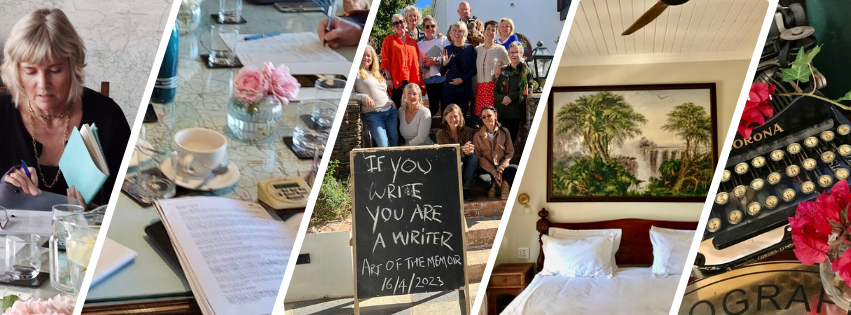
If you’re ready to take the next step, join us for our Memoir Writing Weekend at the Karoo Art Hotel in Barrydale (8–10 May) where Joanne and Jo-Anne will guide you through the skills and structure of memoir writing. For dedicated writing time with daily one-on-one sessions, stay on for the Barrydale Writing Retreat (10–15 May).
Find out more here, or download the brochure here.

Connect with Joanne and Merle
If you watch the webinar or read this guide, we’re confident you’ll be inspired to explore the memoirs that emerged from this coming together of courage and craft. Joanne Hichens’ Death and the After Parties and Merle Levin’s The World According to Merle are excellent examples of what happens when writers give themselves permission to tell their truth—and trust that their stories matter to others walking similar paths.
Joanne: Website, Short Sharp Stories, Instagram, Facebook and Facebook Author Page
Merle: Website, Instagram and Facebook
Ready to Make 2026 Your Best Writing Year?
Whether you’re just starting your writing journey or working on your next manuscript, All About Writing offers the support and guidance you need to achieve your goals.
Start every week with writerly inspiration by signing up for Richard’s Monday Writing Motivations.
Creative Writing Course – Our comprehensive 10-week live course (starting 22nd January) takes you from the fundamentals of storytelling through to crafting compelling narratives. You’ll learn essential skills in character development, plot structure, dialogue, and revision – all whilst receiving feedback on your work and connecting with fellow writers. Sign up here
One-to-One Mentoring – Working on a novel, memoir, or larger project? Our experienced mentors provide personalised guidance tailored to your specific manuscript and goals. Regular sessions help you maintain momentum, work through challenges, and develop your craft whilst bringing your project to completion. More information here
Writers’ Circle – Join our supportive monthly community where writers share work, receive constructive feedback, and benefit from the collective wisdom of the group. It’s the accountability and encouragement many writers need to keep showing up at the page. Join here
Writing Retreats – Immerse yourself in your writing whilst exploring inspiring locations. Join us in the tranquil Karoo at our Barrydale retreat, experience the charm of the English countryside in Stow-on-the-Wold, or find creative inspiration in the romantic canals and literary history of Venice. These retreats combine dedicated writing time, expert workshops, and the opportunity to connect with fellow writers in beautiful, distraction-free settings. There’s something transformative about stepping away from daily life to focus entirely on your craft.
Free Monthly Webinars – Don’t miss our monthly webinars where we explore essential writing topics, answer your questions, and build a community of committed writers.
Whatever stage you’re at in your writing journey, the key is to start now. Make those writing appointments, focus on one project, and surround yourself with a community that understands the challenges and celebrates the victories. Your story deserves to be written—and we’re here to help you do exactly that.
If you’re not sure exactly what’s right for you, why not test the waters with our free Power of Writing Course or email Trish to discuss your writing project and how we can best help you achieve your goals.