The Creative Writing Skills That Make the Most Difference: Key Insights from Jo-Anne Richards and Richard Beynon
Jo-Anne Richards and Richard Beynon go head to head — in the most collegial way possible — to share the creative writing skills they believe make the biggest difference.
Without consulting each other beforehand, each chose their top three skills, covering everything from how to build a scene with dramatic purpose, to why point of view changes not just the feel but the very substance of your story, to the particular power of specific detail. The conversation was practical, honest, and full of the kind of insight that only comes from writers who have spent decades both practising and teaching the craft. Watch the full replay below.
Watch the Replay: The Creative Writing Skills That Make the Most Difference
Six Skills That Will Change How You Write: Essential Insights from Our Creative Writing Webinar
What are the craft skills that really move the needle? Not the ones that fill lists, but the ones that — once you’ve truly grasped them — change the way you read and the way you write?
In this wide-ranging webinar, Jo-Anne Richards and Richard Beynon each chose their three most important creative writing skills independently, without comparing notes. The result was a session of both consensus and productive divergence: some skills overlapped (detail, character, stakes), while others revealed the different emphases two experienced writers can bring to the same craft. Between them, they covered six essential areas. Here are the key insights.
-
Scene Construction: Know Your Dramatic Imperative
Richard’s first skill was the scene — and his argument was a strong one: master the scene, and you’ve mastered everything you need to write a story of any length.
Before writing any scene, Richard works through five questions. First: what is the dramatic imperative — what job does this scene need to do? This might be as small as a character learning a single fact, or as significant as falling in love. But every scene must have a reason for existing.
Second: how will that imperative be achieved? The same piece of information, Richard pointed out, can be delivered in a dozen ways — some flat and functional, some electric. Given the choice, always go for the electric.
Third: who else is present, and what role might they play?
Fourth: where does the scene begin and end? Starting too early delays the action; ending too late loses momentum.
And fifth: what pace does this scene need, given what came before? A helter-skelter action sequence might call for a quieter, more contemplative scene to follow.
For examples of scenes finely crafted and shaped, Richard recommended Elmore Leonard — and specifically Get Shorty or Maximum Bob as good starting points.
-
Character Development: Inhabit, Don’t Describe
Jo-Anne’s first skill was character — and her central argument was that readers don’t care about events. They care about people.
To illustrate, she offered a deceptively simple contrast: tell readers that a man lost everything in a fire, and they’ll move on. But show them a man who makes his wife tea before she wakes each morning, who keeps a photo of his dog in his wallet, who can never throw away a broken thing — and then put that man in the fire. Now they’ll be devastated.
The reason so many first drafts fail at the level of character, Jo-Anne argued, is that writers begin before they truly know their characters. Describing traits and listing qualities is not the same as inhabiting a character — knowing their history, their private fears, their contradictions, the things they’d never admit to themselves. Most of that knowledge will never appear on the page. But readers will feel it, even if they can’t say why.
Her example: Elena Ferrante and the Neapolitan novels. Ferrante knew Elena and Lila from the inside out before she wrote a word. The result is characters whose motivations — including the ones they can’t explain to themselves — feel bone-deep real.
-
Point of View: The Limits You Set Are Your Greatest Asset
Jo-Anne’s second skill was point of view — one of her favourite topics, as she freely admitted, and one she described as changing not just the feel of a story but its entire substance. Choose a different point of view, she said, and you’re writing a different book.
Beyond the grammatical choice of first, second or third person lies a deeper question: how close do you allow the reader to get to your characters’ inner lives, and whose inner life do they enter at all? Using Donna Tartt’s The Secret History as an example, Jo-Anne traced how the first-person narrator — reconstructing events he was partly responsible for — creates something claustrophobic, intimate, and morally uncomfortable. An omniscient third-person narrator would have produced a cooler, more distant novel.
She also made the point about restricted narration and suspense: when your narrator doesn’t know something, neither does your reader. Tana French’s Dublin Murder Squad novels exploit this brilliantly — the investigating detective always narrates, which means the reader shares the same blind spots, wrong assumptions, and emotional investments. The revelations, when they come, hit harder.
Her caution about omniscient narration: it’s the hardest mode to use well. The temptation to explain — because you can — is almost irresistible. The moment you’re explaining what characters would simply live, you’ve lost the intimacy that fiction depends on.
-
Immersion: Detail, Psychological Truth, and Stakes
Richard’s second contribution was really a desired effect rather than a single skill — but one that could be broken into three achievable elements: immersion.
The first is honest, accurate, earned detail. Even in entirely made-up worlds, the details must feel real — and they must be details that the narrator or protagonist has noticed because of who they are, not details the author inserted because they’re vivid. The detail has to be earned through point of view.
The second is psychological truth: the sense that a character’s choices are inevitable, given who they are and what they face. Characters can make unexpected or reckless choices — but those choices must have been set up in advance. Unmotivated behaviour breaks the spell. Richard’s example of a character who doesn’t work: Jack Reacher. Too good to believe. The best heroes are flawed — Frodo, Elizabeth Bennet, Thomas Cromwell — and the flaw must be the thing that drives the plot forward, not a decoration added for texture.
The third element is stakes that the reader can feel. An imminent apocalypse can leave a reader cold if the characters aren’t real to them. A man trying to clear his name before his friends lose faith in him can be gripping, because the stakes — reputation, relationship, self-respect — are clear and relatable. The best plots give you both the plot stakes and the internal psychological ones.
-
Specific Detail: The Small Carries the Large
Jo-Anne’s third skill returned to detail — the area where she and Richard overlapped most significantly, though she extended it in a different direction.
Specific detail, she argued, does more than describe a world: it creates one. And it does something else: it reveals character. What a person notices tells us who that person is. James Baldwin, she observed, doesn’t give us generic hands in Giovanni’s Room — he gives us the very particular, working, damaged hands of a man who has lived physically in the world. One detail that unlocks the whole person.
Her most striking example came from George Orwell, witnessing an execution in Burma. He notices the condemned man sidestep a puddle moments before his death — the body still caring about wet feet. That small, instinctive act, she said, unlocks the full tragedy of capital punishment more powerfully than any direct statement could. The small carries the large better than the large can carry itself.
The principle: show the smoke, let the reader infer the fire. The reader meets your details with their own emotion and imagination — and that collaboration between writer and reader is where the real magic lives.
-
Dialogue: Subtext, Economy, and the Rhythm of Speech
Richard’s third skill was dialogue — something he has spent much of his career thinking about through decades of writing for film and television.
Good dialogue, he argued, has three distinguishing qualities. First: it avoids stating the obvious. Much of the meaning of human communication happens between the lines — in gesture, in what isn’t said. Subtext is not a refinement; for many writers, it is where the story actually lives.
Second: great dialogue is effervescent. It surprises, it amuses, it crackles. Richard’s observation: we spend enormous energy in real life trying to make each other laugh, and then forget to do this when we write characters on a page. Listen to a crowded restaurant, he suggested — the tables where people are laughing are the tables you want to be at. The same principle applies to the page.
Third: good dialogue is economical. Long speeches stagnate. If a thought can’t be expressed in a couple of sentences, consider whether it needs to be expressed at all. And almost always, splitting a subject between two characters — who might hold slightly different positions — generates more energy than a single character speaking at length.
On the question of silences, interruptions, and the ums and ahs of real speech: Jo-Anne spoke from experience. When she listened closely to real speech for her first novel and tried to replicate it faithfully, the result was boring, circular, and stodgy. The rhythm of real conversation is worth capturing; the circularity is not.
Skills from the AAW Community: Bonnie Espie and Sally Andrew
We asked two recently published writers from the All About Writing community to share the skills they rely on most. Both have a note of hard-won honesty in their answers.
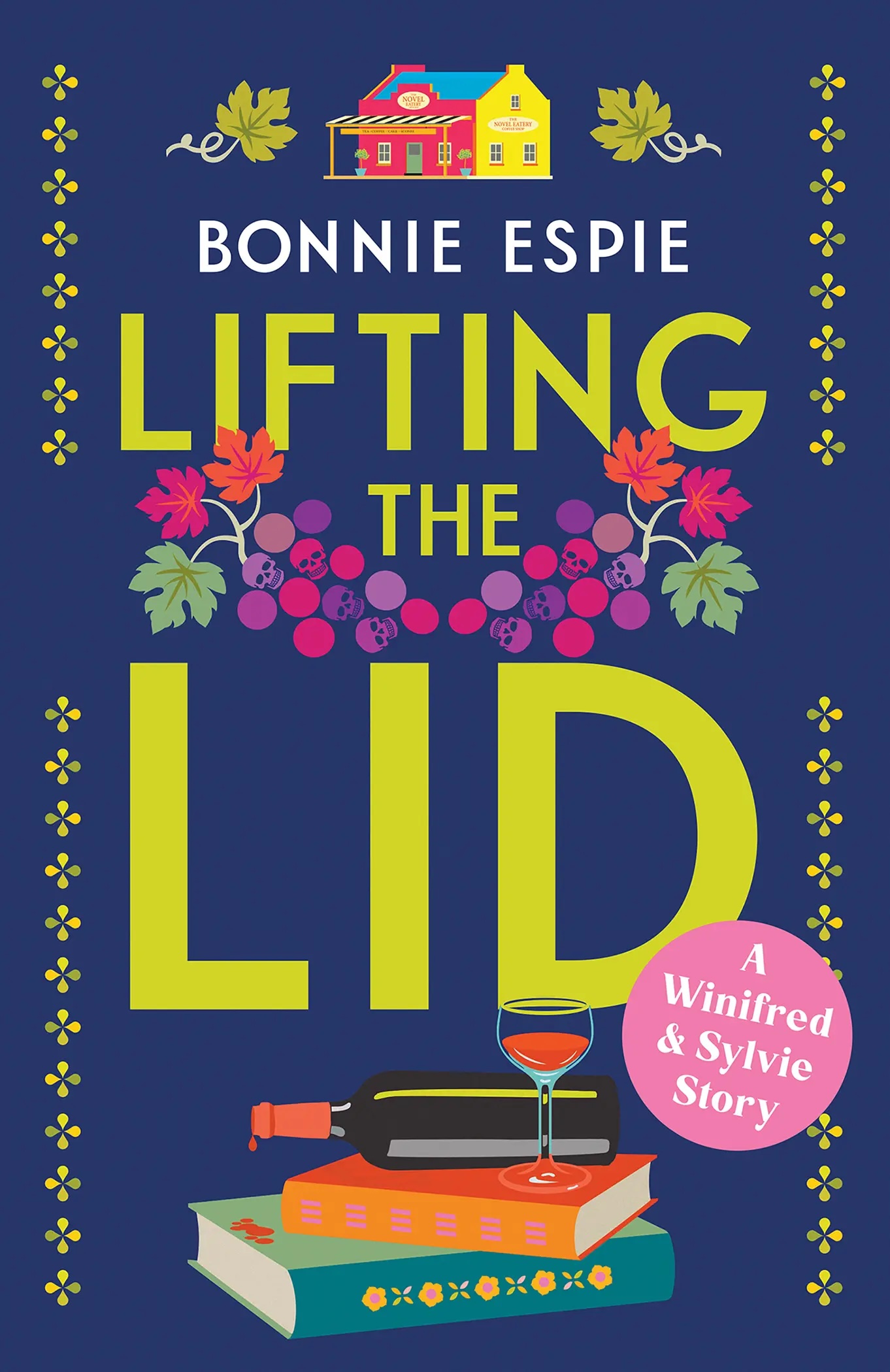 Bonnie Espie is the author of Lifting the Lid (Kwela, May 2026), a darkly comic crime novel set in a South African village — think sharp wit, layered characters, and secrets that refuse to stay buried. Bonnie offered her tips with characteristic candour: these are skills she knows matter because they’re the ones she has to keep an eye on herself.
- Be open to feedback. It often points to the invisible gaps — places where the writer has leapt ahead, but the reader hasn’t been given the steps to follow.
- Slow down. Don’t rush the writing process — take the time to fully develop scenes, ideas, and details so the reader can see the complete picture.
- Focus on specifics. Detail brings writing to life — don’t settle for ‘she lit a cigarette’; tell us which cigarette, how she smoked it, and what that reveals about her.
Buy Lifting the Lid here
Find out more through Bonnie’s website and social media
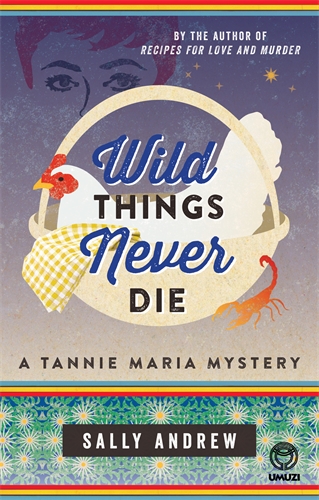 Sally Andrew is the author ofthe award-winning Tannie Maria mystery novels, the latest of which is Wild Things Never Die. Sally framed her three skills around a single idea: duality.
- Plan the structure well, and then allow flow. Strong scaffolding makes space for spontaneous, magical interiors.
- Separate the ‘hats’ of playful creator and discerning editor — don’t wear them both at the same time.
- Do thorough background research, but then resist the urge to over-explain something just because you spent hours learning about it.
Buy Wild Things Never Die here
Find out more through Sally’s website or Instagram
What Participants Took Away
The chat was active throughout, with writers from across South Africa, Namibia, the UK and the US sharing questions and reflections. A few highlights: discussion of how to handle multiple narrators and whose perspective carries the most weight; a debate about fantasy and detail (Richard’s point: the more extravagant the fantasy, the more important it is to get the small, ordinary details right); and the question of scene structure versus organic writing — with Jo-Anne’s gentle caution that scenes written in isolation are almost always going to require significant revision once the full arc becomes clear.
Want to go further?
- Join our ten-week Creative Writing Course with Jo-Anne Richards and Richard Beynon — starting Thursday 21 May. Sign up or find more information here.
- Explore writing retreats in Barrydale, Stow-on-the-Wold, and Venice
- Browse our full range of courses and one-to-one mentoring at www.allaboutwritingcourses.com

Connect with Joanne and Merle
If you watch the webinar or read this guide, we’re confident you’ll be inspired to explore the memoirs that emerged from this coming together of courage and craft. Joanne Hichens’ Death and the After Parties and Merle Levin’s The World According to Merle are excellent examples of what happens when writers give themselves permission to tell their truth—and trust that their stories matter to others walking similar paths.
Joanne: Website, Short Sharp Stories, Instagram, Facebook and Facebook Author Page
Merle: Website, Instagram and Facebook
Ready to Make 2026 Your Best Writing Year?
Whether you’re just starting your writing journey or working on your next manuscript, All About Writing offers the support and guidance you need to achieve your goals.
Start every week with writerly inspiration by signing up for Richard’s Monday Writing Motivations.
Creative Writing Course – Our comprehensive 10-week live course (starting 22nd January) takes you from the fundamentals of storytelling through to crafting compelling narratives. You’ll learn essential skills in character development, plot structure, dialogue, and revision – all whilst receiving feedback on your work and connecting with fellow writers. Sign up here
One-to-One Mentoring – Working on a novel, memoir, or larger project? Our experienced mentors provide personalised guidance tailored to your specific manuscript and goals. Regular sessions help you maintain momentum, work through challenges, and develop your craft whilst bringing your project to completion. More information here
Writers’ Circle – Join our supportive monthly community where writers share work, receive constructive feedback, and benefit from the collective wisdom of the group. It’s the accountability and encouragement many writers need to keep showing up at the page. Join here
Writing Retreats – Immerse yourself in your writing whilst exploring inspiring locations. Join us in the tranquil Karoo at our Barrydale retreat, experience the charm of the English countryside in Stow-on-the-Wold, or find creative inspiration in the romantic canals and literary history of Venice. These retreats combine dedicated writing time, expert workshops, and the opportunity to connect with fellow writers in beautiful, distraction-free settings. There’s something transformative about stepping away from daily life to focus entirely on your craft.
Free Monthly Webinars – Don’t miss our monthly webinars where we explore essential writing topics, answer your questions, and build a community of committed writers.
Whatever stage you’re at in your writing journey, the key is to start now. Make those writing appointments, focus on one project, and surround yourself with a community that understands the challenges and celebrates the victories. Your story deserves to be written—and we’re here to help you do exactly that.
If you’re not sure exactly what’s right for you, why not test the waters with our free Power of Writing Course or email Trish to discuss your writing project and how we can best help you achieve your goals.